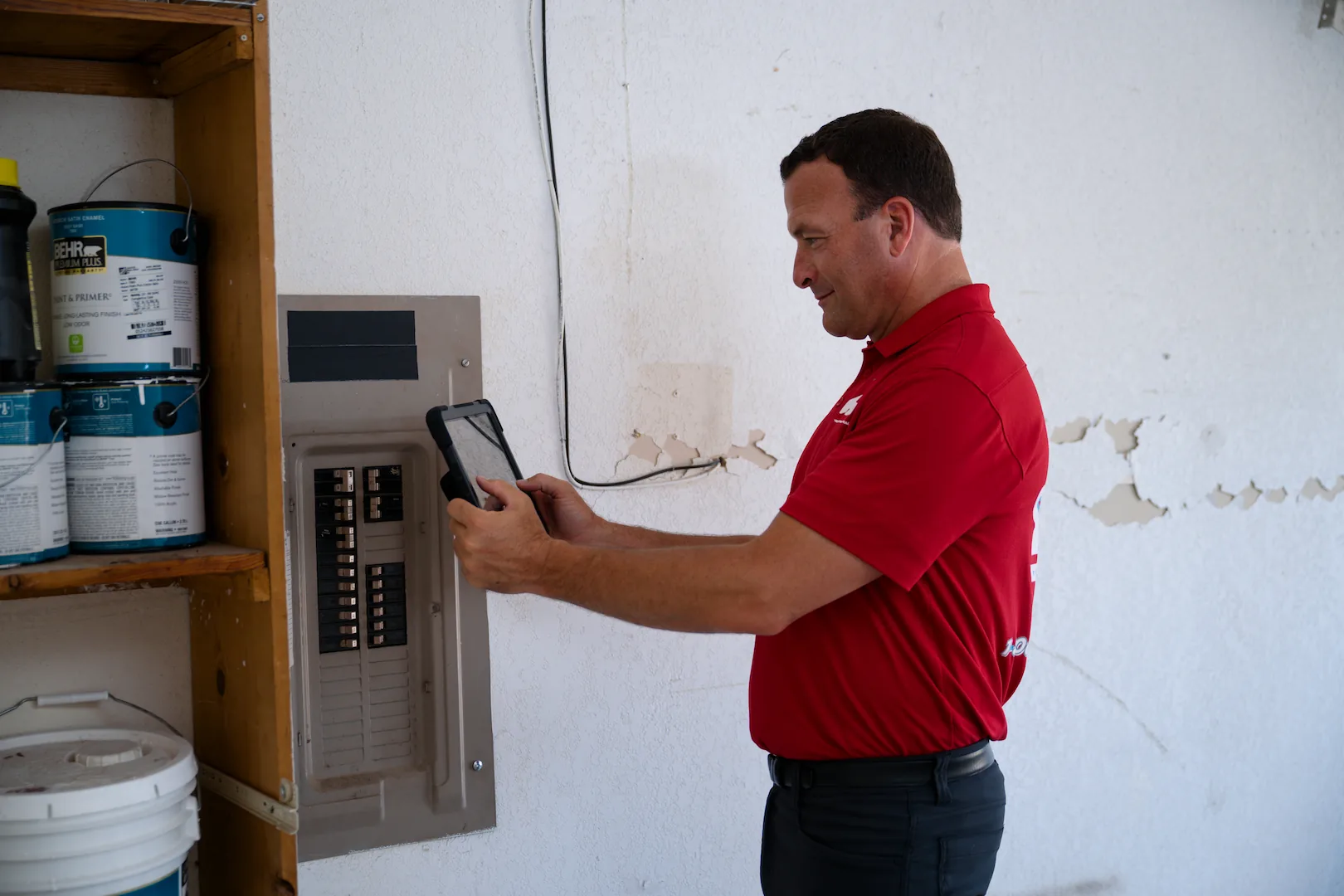
More Dallas-Fort Worth homeowners are going electric one appliance at a time. A Level 2 EV charger goes in the garage. A heat pump replaces an aging furnace. An induction range comes with the kitchen remodel. Each upgrade makes sense on its own, but together they can ask more of your electrical panel than it was built to deliver. Before you buy, it helps to know whether your panel can handle the new load and what goes into 200 amp panel upgrade cost if it can’t.
The licensed electricians at A#1 Air walk through how to size up your panel, what each appliance needs, and how to plan the work in the right order.
Why New Electric Appliances Strain Older Panels
Your electrical panel takes power from the utility and sends it to every circuit in your home. Its amp rating, usually 100, 150, or 200 amps, sets the limit on how much power the house can draw at one time.
Many older homes were wired for 100 or 150 amps. That worked when the largest loads were a central AC and an electric dryer. EV chargers, heat pumps, and induction ranges each need their own dedicated 240-volt circuit, and each one claims a large share of that capacity.
How Much Power Does Each Upgrade Need?
Exact requirements depend on the make and model, so your electrician will always check the manufacturer’s installation guide. These are the typical starting points:
- Level 2 EV charger: A dedicated 240-volt circuit, commonly 40 to 60 amps. EV charging counts as a continuous load, so the circuit is sized at 125% of the charger’s output. A 48-amp charger, for example, needs a 60-amp circuit.
- Heat pump: A dedicated 240-volt circuit for the outdoor unit, sized to its nameplate. The indoor air handler’s backup electric heat strips often need their own circuit, frequently 30 to 60 amps, and they run hardest on the coldest DFW nights.
- Induction range: Typically a 40- or 50-amp, 240-volt circuit.
Adding all three can mean well over 100 amps of new breaker capacity. That does not automatically mean you need a bigger panel. Electricians use a load calculation, based on the National Electrical Code, to estimate how much power your home actually draws at once, since your range, charger, and heat strips rarely all run at full power together.
Signs Your Panel May Already Be Maxed Out
Some panels show their limits before you add anything new. Watch for these warning signs:
- No open breaker slots, or many tandem breakers squeezed in to make room
- Breakers that trip often, especially when the AC or dryer starts
- Lights that dim or flicker when a large appliance turns on
- A panel or breaker that feels warm, buzzes, or smells like burning plastic (call an electrician right away)
- 100-amp service or less
- Rust or corrosion inside the panel, common in garages and exterior walls
- An older panel brand with known reliability concerns, such as Federal Pacific (Stab-Lok) or Zinsco
If any of these sound familiar, schedule an electrical inspection before you commit to a new appliance. Tripping breakers can also point to a problem our electrical troubleshooting team can track down.
Do You Always Need a 200 Amp Panel Upgrade?
No. Once the load calculation is done, most homes land in one of four places:
- Your panel has room. The electrician adds the new circuit and you’re set.
- Load management makes it work. Some EV chargers can share power or pause charging when the house is drawing heavily. A separate load management device or smart panel can do the same, which can avoid an upgrade in some homes.
- A lower charger setting fits. Many Level 2 chargers can be set to a lower amperage. You charge a little slower overnight, but the circuit and the panel stay within limits.
- An upgrade is the right call. If the numbers don’t work, or your panel is outdated or damaged, moving to 200-amp service gives you room for today’s upgrades and the ones still on your list.
If you plan to add more than one of these appliances over the next few years, plan the panel once. Upgrading for the EV charger now and again for the heat pump later usually costs more than doing it right the first time.
What Affects 200 Amp Panel Upgrade Cost in DFW?
Every home is different, so an honest price comes after an in-home look. These are the factors that move the number most:
- Panel only or full service upgrade. Swapping the panel costs less than also replacing the meter base and the service entrance wiring.
- Utility coordination. The utility has to disconnect and reconnect power. For many DFW homes, that utility is Oncor.
- Permits and inspections. Most DFW cities require an electrical permit for a panel replacement, and fees vary by city.
- Panel location and existing wiring. A panel that needs to move, or older wiring that needs repair, adds labor.
- Code updates triggered by the work. A new panel can require bringing related parts of the system up to your city’s current code, such as whole-home surge protection or arc-fault breakers.
- New circuits added at the same time. Running the EV charger or range circuit during the upgrade is usually more efficient than a separate visit.
Ask for a written estimate that lists each of these items. A#1 Air offers flexible financing, and you can check our current specials for electrical savings.
Plan Your Upgrades in the Right Order
Start with the panel, not the appliance. A load calculation before you buy tells you which charger, range, or heat pump setup your home can support. If you’re replacing a furnace with a heat pump, ask about the electrical side during your heating installation estimate. If induction is part of a kitchen project, fold the new circuit into your electrical remodeling plan.
Older homes may also have wiring issues that surface during an upgrade. Our guide to electrical code violations in Dallas covers the most common ones.
Get a Panel Check From A#1 Air
Whether you’re adding an EV charger in Fort Worth or trading a furnace for a heat pump in Plano, A#1 Air’s licensed electricians can run a load calculation, inspect your panel, and lay out clear options before you spend a dollar on new equipment. We’ve served DFW homeowners since 1989, and every job comes with our 100% satisfaction guarantee.
Call 972-746-2224 or schedule service online. Guaranteed Right, Day or Night!
Texas Electrical License #39389